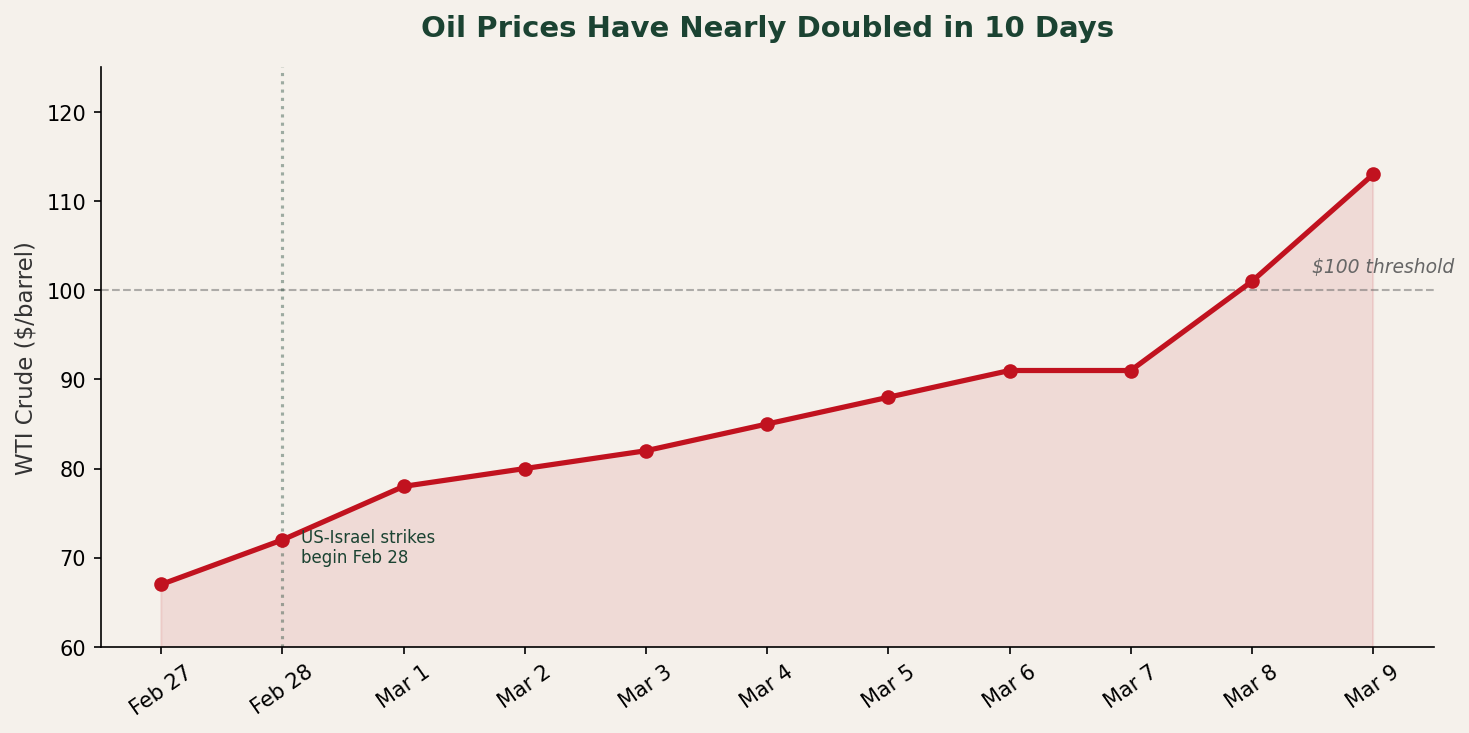
If you've been watching the news this week, you've seen the headlines. The U.S. and Israel launched strikes on Iran on February 28th, the Strait of Hormuz is effectively shut down, and oil has blown past $100 a barrel for the first time since 2022.
As a short-term rental operator in the Bay Area, an oil spike doesn't just affect what you pay at the gas pump. It hits the cost of running your STR business in ways that aren't immediately obvious. Here's how it affects your margins and what you can do about it.
The hidden surcharges in STR operations
Short-term rental operations run on logistics, and logistics run on fuel. Your cleaning crews, your maintenance techs, your laundry service. They all operate vehicles and equipment that are sensitive to energy costs.
When gas prices jump from $3.00 to $3.45 a gallon in two weeks, those vendors feel it immediately. And they pass those costs along. Sometimes as explicit fuel surcharges, sometimes as quiet rate increases on the next invoice. I've seen this cycle play out multiple times over my years managing properties here. Now is the time to review your vendor agreements. Do you have locked-in rates with your cleaning crew? If not, expect your per-turnover cost to creep upward as long as oil stays above $100.
Utilities and your bottom line
The energy spike goes beyond vehicle fuel. Natural gas and electricity costs track closely with the broader energy market. If you're paying utilities on your STR units, and most hosts are since guests expect utilities included, your monthly operating costs are going up.
This is where nightly rate optimization matters. Your pricing strategy needs to account for rising operating costs, not just market demand. A flat nightly rate set three months ago doesn't reflect the current cost environment. Dynamic pricing tools that factor in your actual operating expenses, not just comparable listings, give you a real edge in protecting margins during periods like this.
Why occupancy is your best defense right now
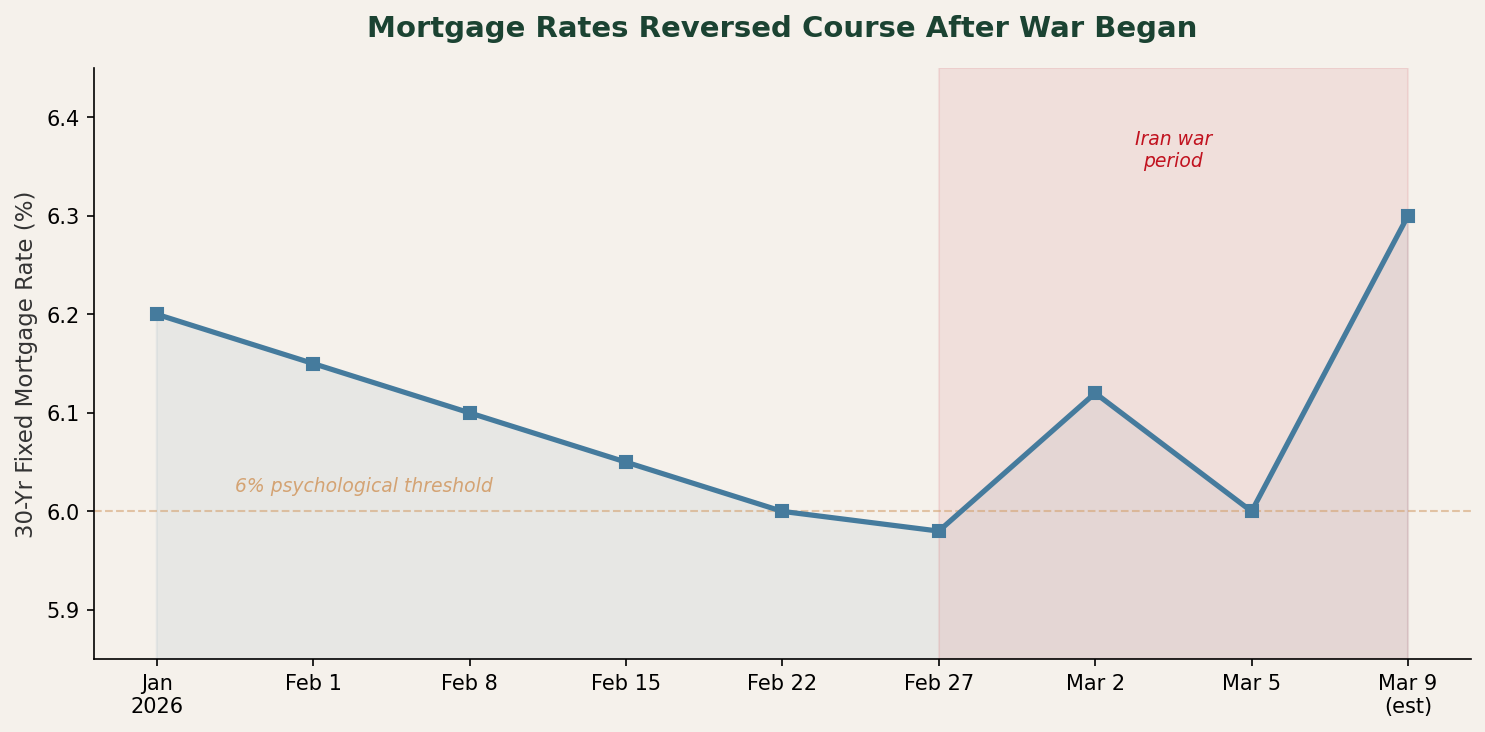
When energy costs rise, inflation follows, and the Federal Reserve keeps interest rates elevated. As you can see in the chart above, mortgage rates have already bounced back over 6%.
This actually works in your favor as an STR operator. With mortgage rates climbing, fewer people are buying homes. That means more people need temporary and short-term housing. Corporate relocation timelines stretch out when employees can't quickly purchase a home in their new city. Extended-stay bookings increase. Demand for furnished, move-in-ready short-term rentals goes up precisely when the broader housing market tightens.
Focus on occupancy. A steady stream of bookings is the best way to absorb rising operating costs. If you're seeing gaps in your booking calendar, here's our playbook for optimizing your listing to fill them.
If you're feeling the margin squeeze, reach out for a free rental analysis. At minimum, it'll give you a clear picture of where your STR revenue stands relative to the market.
Ready to optimize your property?
Get a professional evaluation of your property's STR revenue potential, completely free.
Start Partnership